
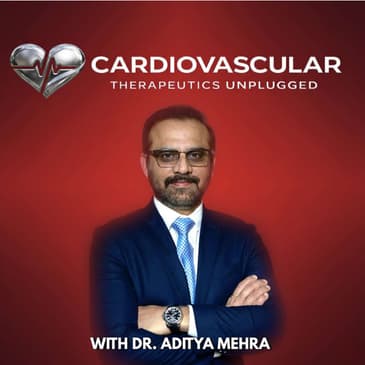
Most patients diagnosed with atrial fibrillation (AFIB) are handed a prescription for blood thinners often without ever learning about another potentially life-changing option. In this episode of Cardiovascular Therapeutics Unplugged, Dr. Aditya Mehra deep dives into the two main tools for stroke prevention in AFIB: traditional anticoagulants and the innovative Watchman device. He breaks down how blood clots form in the heart, why stroke prevention must be one of the very first conversations in AFIB care, and what patients need to know to make the right decisions for themselves. Whether you’re newly diagnosed, struggling with the side effects of blood thinners, or simply curious about new advances in heart treatment, this episode arms you with the questions and answers that could shape your journey.
00:00 Discussing atrial fibrillation tools
06:44 Understanding Atrial Fibrillation Basics
10:08 Left atrial appendage and heart function
13:33 Assessing bleeding risk with HAS-BLED score
17:08 Addressing anticoagulation gaps
18:22 Stroke risk in elderly patients
23:17 Watchman device heart procedure
26:55 Comparing Watchman device to warfarin
31:36 Patient awareness of new tech
33:02 Discussing patient education on AFib
36:19 Discussion on AFIB stroke prevention
Understanding Stroke Prevention in AFIB: Blood Thinners vs. the Watchman Device
Atrial fibrillation (AFIB) is a common heart rhythm disorder so common, in fact, that Dr. Mehra shared that 6 million Americans and up to 40 million people worldwide are affected. Most AFIB patients leave their first cardiology appointment with a prescription for a blood thinner and not much else. But what many don’t realize is that another powerful option exists: the Watchman device. This episode of Cardiovascular Therapeutics Unplugged dives deeply into both these options, equipping patients with the knowledge to have life-changing conversations with their cardiologists.
The Stroke Risk in AFIB Is Real and Rising
AFIB is often framed as a chronic condition to be managed, but as Dr. Mehra stresses, stroke prevention must be front and center in every treatment discussion: “Atrial fibrillation is driving the train of a stroke. It’s the stroke’s engine.” The statistics are sobering: AFIB is responsible for 15-20% of ischemic strokes a number that jumps to 30% in patients over the age of 80. For adults over 40, the risk of developing AFIB is a startling one in four. With our aging population, these numbers are only increasing 04:22.
The strokes caused by AFIB tend to be particularly devastating because they often result from clots that form in the heart and then travel to the brain. Dr. Mehra sees the consequences firsthand, walking through the stroke unit on Monday mornings and consulting on patients whose lives have been irrevocably changed 02:10.
Why the Left Atrial Appendage Matters
Understanding anatomy helps clarify why treatment options are what they are. In most AFIB patients, clots form in a small, finger-like pouch called the left atrial appendage (LAA). When the heart is in AFIB, the left atrium quivers instead of pumping regularly, causing blood to pool in the LAA, where it’s prone to clotting 06:44.
This makes the LAA a central target for both pharmacological and procedural approaches to stroke prevention. Dr. Mehra uses an evocative description: some clinicians call the LAA a “cauliflower” or “windsock,” and while it serves little natural function, its structure creates a perfect storm for blood clots 09:10.
Blood Thinners: Benefits and Limitations
Anticoagulants remain the standard preventive therapy for most patients with AFIB and significant stroke risk. These drugs ranging from warfarin to newer agents like apixaban and rivaroxaban have robust evidence showing they reduce strokes, with more recent agents offering greater safety and convenience 14:14.
But blood thinners aren’t without problems:
Bleeding Risk: Some patients are at high risk for bleeding. The balancing act between preventing stroke and avoiding dangerous bleeds is central to the treatment decision. Tools like the CHA₂DS₂-VASc and HAS-BLED scores help guide choices 12:46.
Adherence Issues: Elderly patients, those prone to falls, or those with memory difficulties may struggle with medication adherence—which can be life-threatening 18:39.
Contraindications: Major GI bleeds or prior intracranial hemorrhage may exclude patients from long-term use.
The Watchman Device: An Alternative for Some
For patients who cannot take blood thinners safely or consistently, the Watchman device offers a proven alternative. Dr. Mehra explains that this minimally invasive procedure involves threading a device via the femoral vein into the heart to seal off the LAA and prevent clot formation 23:17. Most patients spend a night in the hospital and may continue on blood thinners briefly until the device is fully incorporated into heart tissue, after which most can stop blood thinners entirely 25:19.
The Watchman is not for everyone preoperative imaging is required to assess if the patient’s LAA anatomy is suitable, and procedural risks are carefully considered. But long-term studies now demonstrate that the Watchman is non-inferior to warfarin for preventing stroke, with ongoing research comparing it directly to newer anticoagulants 27:20.
The Take-Home Message
Dr. Mehra is unequivocal: “AFIB can have devastating consequences. Don’t take it lightly.” Whether through blood thinners or a device like the Watchman, proactive stroke prevention is essential. “What’s my real risk? What are my options? What are the trade-offs?” 33:32.
Empowered with the right questions, AFIB patients can take charge of their journey and protect themselves from one of the most preventable causes of stroke.